The idea of cutting off communication from the world might be a cause for panic attacks. But as Vipassana centres around Mumbai report, the number of stressed-out city dwellers between the ages of 22-30 who’re opting for the intensive meditation technique is steadily increasing.
The number of people below the age of 30 who opt for Vipassana has increased noticeably in the past year. “While Vipassana was considered to be popular among the older crowd, we now find that the number of people below the age of 30 outnumber the senior crowd.”
She adds that during the vacation season, the ratio of women to men is higher: “Most come because they cannot handle the stress in their daily lives.”
Read More : http://www.hindustantimes.com/Vipassana-meditation-popular-with-youth/Article1-732516.aspx
Friday, August 12, 2011
Tuesday, July 19, 2011
Ten days of silence- why is it so popular?
Here's the interview Leon did on Monday (July 18) with Patrick Given- Wilson, a former merchant banker, now meditation instructor.
He spoke at length about his extraordinary story and why ten day courses of absolute silence (Vipassana meditation) are becoming more and more popular.
Listen to the full interview here: http://blogs.abc.net.au/files/patrick-given-wilson.mp3


Wednesday, June 29, 2011
Introduction to Vipassana Meditation


A short video with subtitles in multiple languages that consists of a series of interviews with Vipassana students. They talk about how they first came to a Vipassana course, and what the practice of Vipassana has meant to them in their lives. The title of this film is "Practicing Vipassana: Meditator Experiences". The interviews were conducted of students from various countries and were recorded at the Italian Vipassana Center.
Watch videos online: http://video.server.dhamma.org/video/intro/vintro.htm
Friday, June 3, 2011
The Life Out Loud: Sometimes You Need to Shut Up [Video]
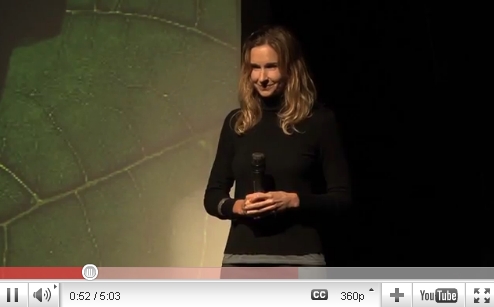
Think meditation is only for monastic types? The kind of people who chant "Hare Krishna" as they dance about in their orange robes? So did I. Until I really tried it, that is.
In the fall of 2007, I attended my first 10-day silent Vipassana meditation retreat. Find out what happened -- and why you should do one, too -- by watching my 5-minute Ignite talk:

Watch video: http://www.huffingtonpost.com/meimei-fox/vipassana-meditation_b_868335.html
Saturday, May 21, 2011
The Life Out Loud: Learning to Revel in Your Sorrows
.........After years of failing to avoid the darkness, I finally confronted it when I attended a 10-day silent Vipassana meditation retreat in 2007. I had no choice but to sit, and sit some more, and then sit some more, because that's all we were permitted to do (aside from eating two meals per day). It turned out that the broken record player in my mind was stuck on one boring track: "You're a loser. You failed at your marriage. Your family is a mess. You're the only one of your friends not to have a partner and kids. You're nothing but a ghostwriter in your professional career. Whatever happened to you, MeiMei Fox? Where did you go wrong?"
Read more: http://www.huffingtonpost.com/meimei-fox/reveling-sorrow_b_862288.html
Read more: http://www.huffingtonpost.com/meimei-fox/reveling-sorrow_b_862288.html
Wednesday, March 9, 2011
Ten days without talking
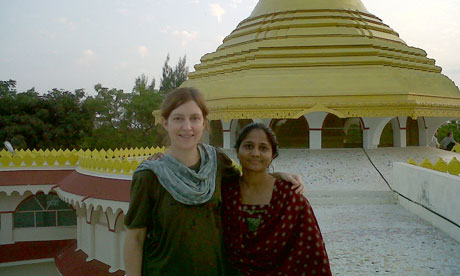
Was it possible to survive 10 days of meditating in an Indian retreat without speaking, reading or making eye-contact with fellow guests?
What I have to admit afterwards is that sensation-seeking is the very antithesis of meditation. It is not about the colours or the bliss; rather it's about strengthening the muscle that helps build resilience. A steady practice that leaves you a bit better equipped to pause before lashing out, to rise above perceived slights and not be put off by the usual setbacks. A little more able to face life's vicissitudes with equanimity, as Goenka would say.
Read more: http://www.guardian.co.uk/lifeandstyle/2011/mar/09/ten-days-without-talking
Friday, February 11, 2011
Meditation with the FT: Tim Parks
Through meditation, Tim Parks was able to cure himself of chronic pelvic pain
What do you learn in this school?
That the discomfort you feel sitting cross-legged is directly related to your mental activity which, deprived of all fresh input, reveals itself as an endless churn of self-regard, pointlessly rewriting the past, vainly scripting the future, stubbornly avoiding the present.
That the moment you truly focus on your breathing, thought subsides and everything relaxes, everything is easy.
That exploring the body with this intensity over so many days will change forever your perception of what it is and who you are.
At long last, when you do learn not to react to pain, pain itself is much diminished, even irrelevant, while pleasure is the more pleasurable when you learn not to hang on to it. The Buddhist context can be taken or left as you please. The meditation works fine without any belief.
Read more: https://www.ft.com/content/e544348c-33eb-11e0-b1ed-00144feabdc0
Tuesday, February 8, 2011
At End-Of-The Line Prison, An Unlikely Escape

Deep in the Bible Belt, an ancient Eastern practice is taking root in the unlikeliest of places: Alabama's highest-security prison.
Behind a double electric fence and layers of locked doorways, Alabama's most violent and mentally unstable prisoners are incarcerated in the William E. Donaldson Correctional Facility outside Birmingham. Many of them are here to stay. The prison has 24 death-row cells, and about a third of the approximately 1,500 prisoners are lifers with no chance of parole.
Read more: http://www.npr.org/2011/02/08/133505880/at-end-of-the-line-prison-an-unlikely-escape
At End-Of-The Line Prison, An Unlikely Escape
Deep in the Bible Belt, an ancient Eastern practice is taking root in the unlikeliest of places: Alabama's highest-security prison.
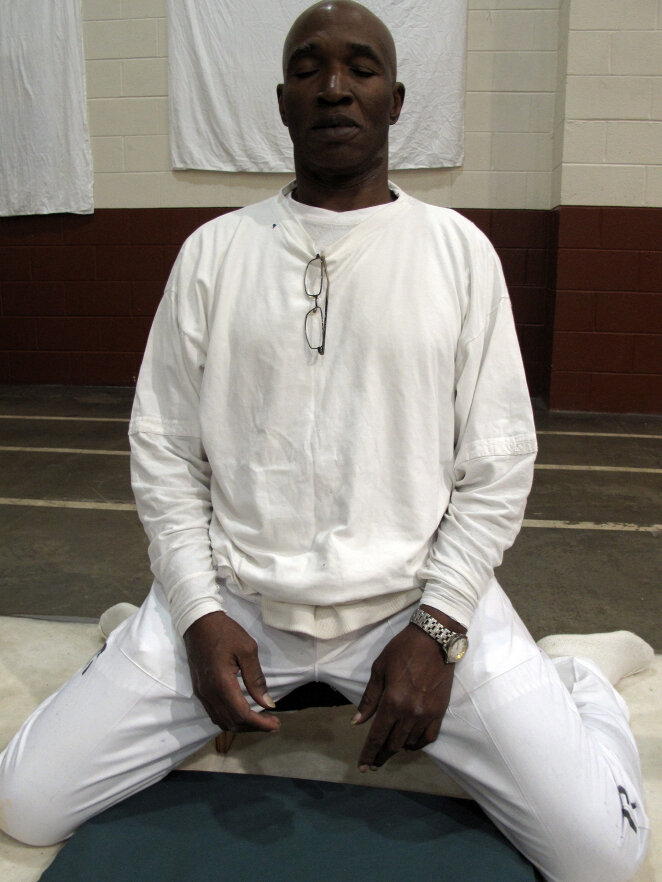 Convicted murderer Johnny Mack Young in the meditation stance he keeps for nearly 10 hours a day during the 10-day silent meditation course. Officials say the meditation program is reducing violence at Alabama's highest security lockup. "It changed my life," Young says.
Dr. Ron Cavanaugh, treatment director for the Alabama Department of Corrections, says many inmates put their defenses up, denying responsibility for their crimes and blaming others. But the meditation practice, he says, chips away at those defense mechanisms.
More information: https://www.npr.org/2011/02/08/133505880/at-end-of-the-line-prison-an-unlikely-escape
Dr. Ron Cavanaugh, treatment director for the Alabama Department of Corrections, says many inmates put their defenses up, denying responsibility for their crimes and blaming others. But the meditation practice, he says, chips away at those defense mechanisms.
More information: https://www.npr.org/2011/02/08/133505880/at-end-of-the-line-prison-an-unlikely-escape
Tuesday, July 27, 2010
Know that you are largely your mind
Through regular practice of Vipassana, one starts benefiting on various fronts. Reduced stress, better concentration and steadiness, greater ability to take decisions and give up habits such as smoking and drinking, improvement in health, etc are commonly experienced. Health improves because it is a reflection of the mind, and as the mind becomes purer, wonderful results have been seen in a large number of cases.
At a philosophical level, the whole karmic cycle starts becoming clearer in terms of one’s life experiences. One moment of experience of the fire will teach far more than a million year discourse on it. Thus, Vipassana seeks to bring about a change from within by operating at the root of the mind. Vipassana is taught absolutely free (too valuable to be priced) in 55 languages at more than 150 centres in India and 90 other countries of the world. The tradition is maintained by the donations.
Read more : http://liveweb.archive.org/http://www.dnaindia.com/lifestyle/comment_know-that-you-are-largely-your-mind_1415613
At a philosophical level, the whole karmic cycle starts becoming clearer in terms of one’s life experiences. One moment of experience of the fire will teach far more than a million year discourse on it. Thus, Vipassana seeks to bring about a change from within by operating at the root of the mind. Vipassana is taught absolutely free (too valuable to be priced) in 55 languages at more than 150 centres in India and 90 other countries of the world. The tradition is maintained by the donations.
Read more : http://liveweb.archive.org/http://www.dnaindia.com/lifestyle/comment_know-that-you-are-largely-your-mind_1415613
Sunday, July 4, 2010
‘You have to work out your own salvation’

SN Goenka is the leading teacher of vipassana, a popular Buddhist meditation technique. He was born in Burma to Indian parents and raised as a Hindu. He spoke to The Indian Express Editor-in-Chief Shekhar Gupta on NDTV’s Walk the Talk on how Buddhism changed him and how he brought vipassana back to the country of its origin
How is vipassana different from other forms of meditation?
Vipassana is observation of truth. Not the apparent truth. Not your face or your arms. You feel what is happening inside you. The mind becomes very sharp in three days. In those three days, no words are used. Nobody asks you to chant Buddha’s name. Just observe the truth, the breath coming in and out of you. Experience the truth as is the law of nature. From the fourth day, you are asked to observe the whole body, to get different sensations, pleasant sometimes, but mostly unpleasant. A lot of negativity amd impurities well up in their minds. Then they realise what they are doing. They realise they are harming themselves and they start changing. This is how the change comes, with their own experience.
Read more: http://www.indianexpress.com/news/you-have-to-work-out-your-own-salvation/640972/0
Saturday, June 26, 2010
Walk The Talk with S N Goenka

In this episode of Walk the Talk, Shekhar Gupta talks to Satya Narayan Goenka, Principal Teacher of Vipassana - a meditative technique of self-observation.
Watch online: http://www.ndtv.com/video/player/walk-the-talk/walk-the-talk-with-s-n-goenka/149260
Sunday, April 4, 2010
The prison of Nirvana

Vipassana meditation camps in Tihar jail have tangibly transformed lives and minds: from anger to tolerance, violence to ahimsa, hatred to love. Hardnews interviewed five 'hardcore' accused in jail, who seem to have come a long way from condemnation to inner peace
Shaweta Anand
In a heart-to-heart conversation with five prison inmates - two murder convicts, one rapist and two undertrails - in Tihar's Jail No. 4 in Delhi, what struck me most was that there was not one moment during our intense, three-hour session that I felt uncomfortable in their presence. Despite bearing the tag of 'hardcore criminals', they came across as ordinary, peace-loving people, almost fated by destiny as much as their own actions. What followed, as they shared bananas with this reporter, are intensely complex and tragic accounts of their private histories, their prison-life and their unexpected tryst with 'Vipassana'.
.... Mahavir is a murder convict facing life penalty, who meditates regularly and volunteers cheerfully to serve at Dhamma Tihar. "I was a modest businessman but a feud ensued between some business parties that led to murder. Extreme anger has always been my problem. Even after conviction, I used to be sent to kasuri ward (sinner's ward) because I used to pick up fights with everyone, including with the jail administration. That ward is a small room in which troublesome inmates are kept locked for 23 hours and let out only for one hour as punishment. But after Vipassana camps, I hardly get angry; everyone can see the difference and they keep complimenting me."
By some quirk of fate, those who were involved in the conflict with Mahavir, landed in jail too, for some other petty offence. "No matter how much they wanted to provoke me or pick up a fight, I kept giving them mangal maitri and slowly, we became friends," he said.
My final question to him was about God and this is, by far, the best answer I have ever heard: "God is anyone who is able to work on his mind (patterns) and improve it not only for his own good but also for that of the society."
Read more: http://www.hardnewsmedia.com/2010/04/3524
Thursday, December 31, 2009
A Little Reflection… Vipassana Meditation: Was it Worth It?
In the months and years since I took a ten-day Vipassana Meditation course in Nepal, friends and readers have asked me to share my thoughts, now that I have distance from the experience. I jotted a few sparse notes during the course, and journaled on Day Eleven to chronicle my ten-days in a Vipassana course. Those entries shared the raw thoughts and feelings as I processed each day of meditation and course teachings. During the course, I was deep in the middle of the pain and difficulty. There was little room for reflection.

What the Heck is a Vipassana Meditation Course?
I dubbed my time in Vipassana meditation as my ten day stint in “solitary confinement.” It’s how it felt at the time. And even in retrospect this intense mediation course as one of my wackier decisions. It’s one of the most structured and regimented forms of meditation. The rules are strict and the entire process is tightly control. This course was the hardest thing I have ever voluntarily chosen. More than six months later, I was endlessly thankful that I was able to complete it, that I had the support and stamina during the course finish. And now, seven years later I still look at that course as a formative foundation on how I approach life.
A few of the strict rules:
- You cannot speak or communicate (non-verbal communication like eye-contact is a no-no)
- No reading or writing
- Food is restricted after the mid-day meal
- You must adhere to the meditation schedule of 10+ hours of meditation and an hour of discourse in the evening
Main website: https://www.dhamma.org
Nepal Center: https://pokhara.dhamma.org/
Wednesday, September 9, 2009
Rivers Cuomo and Vipassana Meditation

Weezer's Rivers Cuomo discusses meditation with Dan Harris.
Watch online: www.abcnews.go.com/WNT/video/rivers-cuomo-meditation-weezer-frontman-singer-musician-punk-rock-11598553
Monday, June 15, 2009
Inner space: The power of solitude

When Tom Darling told his friends he planned to spend 10 days in silent meditation with a group of strangers, they joked that he was joining a cult. But the experience – gruelling and profound – offered an extraordinary antidote to the modern world
.......... He's not the only one smiling: there's a general sense of achievement flowing through most of us, the type that comes from completing something difficult that you suspect will benefit you for some time to come. Some of the students I talk to describe the feeling as having undergone a deep cleansing, a re-evaluation of their priorities, even a rebooting of the system. It's odd suddenly to be able to speak to my roommates after so many days of silent cohabitation. The young guy from Manchester smiles ruefully when I see him. "Yeah, mate, that was no holiday." Anik and I sit on a bench outside the old farmhouse, the paint flaking off onto the ground beneath us. So was it all he hoped it would be? "No question," he says without a moment's hesitation. "I've been looking for something to help me achieve certain goals, and I think this is it. I don't know about the others, but for me this was always about improving myself, about becoming more successful."
Read more: http://www.independent.co.uk/life-style/health-and-families/healthy-living/inner-space-the-power-of-solitude-1705207.html
Sunday, October 12, 2008
Jenny Phillips on Oprah


In 2008, Jenny released the self-produced documentary The Dhamma Brothers, which followed 36 prisoners at the Donaldson Correctional Facility in Alabama through a 10-day silent vipassana meditation course. Her book Letters from the Dhamma Brothers: Meditation Behind Bars is a collection of letters and interviews from inmates who took part in the meditation course. The book depicts prison life and the journey many of the prisoners took to better understanding the teachings of Buddha and achieving inner peace.
See more: http://www.oprah.com/spirit/Jenny-Phillips-on-Oprahs-Soul-Series-Webcast
Thursday, July 3, 2008
Pecatonica meditation center helps people find balance

..... Once participants enter the site, they are asked to leave behind religious objects, intoxicants, tobacco, iPods, cell phones and reading or writing materials. Participants also are asked to observe the “Noble Silence,” or to abstain from talking.
Kate Anderson, center manager for Pecatonica, said only then can people understand what silence really is. Students are asked to suspend other forms of prayer or worship, meditation or yoga. Anderson said this is advised in order to fully experience and understand Vipassana and not impede upon the meditation. She said monks, priests and nuns from a variety of religions have taken courses at Vipassana meditation centers.
“Everyone who comes here, they have their own religion – they’re Jewish or they’re Catholic or Muslim,” Anderson said. “They come here to learn this technique.”
Students of the course learn techniques to change their reactions in daily life from anger, negativity, misery and other stressful situations to positive ones, Anderson said.
Days begin with the low resonating of a Burmese-style gong at 4:30 a.m. Each day ends at 9:30 p.m. Students are required to meditate in the meditation hall three times a day, with other time slotted for meditation either in the hall or their room throughout the day.
Read more: http://www.rrstar.com/news/yourtown/x415953142/Pecatonica-meditation-center-helps-people-find-balance
Friday, June 27, 2008
Meditation - A CLOSE ENCOUNTER WITH THE NON-SELF

Oddly enough, the course's monastic severity is largely responsible for its popularity; since the results, judging by the responses, are commensurably high. Mohan Nathani, 63, a retired income tax officer who has repeated the course five times, reveals: "It was during my first course that I really experienced bliss."
Christians, including priests and nuns, come regularly for vipassana. Sister Regina Rosario of the order of the Sisters of Mary of the Cross, says: "Being used to meditation, I didn't find it too difficult. It has made me more aware of my actions and reactions." She feels that vipassana has brought her closer to a spiritual goal. "Compassionate love for crucified Christ, and thus for my neighbors."
N. Vaghul, a financial wizard who meditates for three to four hours daily, feels that vipassana has changed his relationship with people and his views. "Best of all, I no longer look for professional recognition or rewards. I work in order to contribute."
Moushomi Chatterjee, who took a course in early March, is raring to go again. "It makes you realize who you are, that you can also be a Buddha."
Read more: http://www.lifepositive.com/Spirit/meditation/vipassana/vipassana-meditation.asp#goenka
Friday, April 11, 2008
State of Grace: How Buddhist Teachings Transformed a Maximum Security Prison in Alabama
“The stories of The Dhamma Brothers ring with the truth and power of their experiences, and offer the hope for renewal and rehabilitation within a dismal and punishment-oriented correctional system. It gives you hope for the human race.” —Sister Helen Prejean, author, Dead Man Walking
In her new documentary, The Dhamma Brothers, Phillips frames the daily, shackled grind of the prisoners’ lives with these social injustices, but also investigates, with a fresh, clear perspective, what it is like to be a prisoner doing hard time in the South choosing to practice guided Buddhist meditation techniques.
Deep within this facility’s walls, an unlikely group of inmates (some on death row) are challenging all of the stereotypes and misconceptions about the South, about prisoners, about masculinity, and about the modern spirituality of the incarcerated. They, in fact, were transcending these trappings by practicing Vipassana, an intense, silent, ten-day crash course induction into a sacred world many of the inmates had likely never even heard of until Donaldson became the first prison in the United States to give it a try.
In a region where anything other than Christianity is predictably labeled “witchcraft” (as one woman interviewed called Buddhism—“I don’t believe it will help at all”), Dr. Ron Cavanaugh, Director of Treatment for the Alabama Department of Corrections, decided to throw caution to the wind and try something revolutionary and unprecedented. In short, mainly, because there wasn’t anything to lose.
Read more: http://www.popmatters.com/pm/feature/state-of-grace-how-buddhist-teachings-transformed-a-maximum-security-prison/
Subscribe to:
Posts (Atom)